

Mental Health Apps
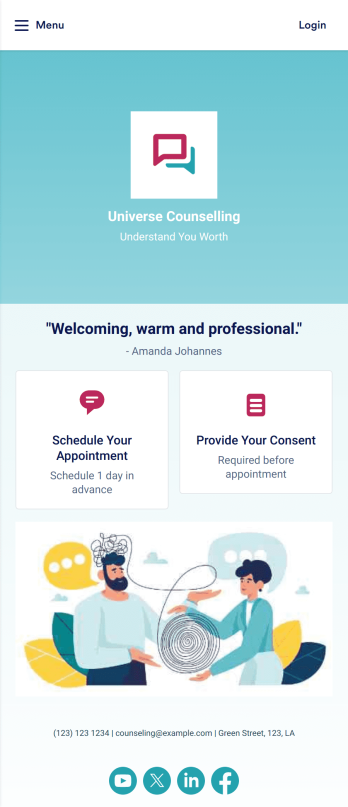
Counseling App
A counseling app provides easier access to mental health resources and tools. Whether you’re a school counselor, family therapist, or life coach, build a fully-custom app for your counseling services with our free Counseling App Template. This ready-to-use app template comes with multiple forms — including a client information form, COVID-19 consent form, and appointment booking form — so clients can access and fill out your forms all from one place.Make this Counseling App your own by customizing it in just a few clicks. Without any coding, you can create and add new forms, embed links to other sites, update the provided text, upload different images, and change app settings. Once you’re satisfied with the app design, embed the app link in your website or send it directly to clients to download on their preferred devices. Make it easier for clients to get the help they need with a professional Counseling App for your services.
Go to Category:Consulting Apps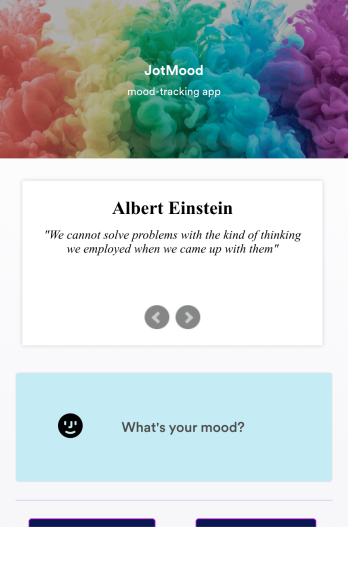
Mood Tracker App
Tracking your mood is a great way to learn how to manage your emotions and understand triggers. Start tracking your moods or help patients track theirs with our free Mood Tracker App you can customize in just a few clicks! This ready-to-use app provides a single place for users to add their moods through a form and view all their submissions at once in order to see any recurring patterns. You can use this app yourself, or share it with patients to help them monitor their progress in therapy.Want to customize your Mood Tracker App? With our drag-and-drop interface, you can create and add more forms to your app and even change its icon, name, splash screen, and background. Feel free to upload images, include links, update the text, and more. You’ll be able to access and download your app from any smartphone, tablet, or desktop. Make it easier to keep track of how you’re feeling with a custom Mood Tracker App you can easily use from any device.
Go to Category:Entertainment
Coaching App
A coaching app is used by coaching companies — like fitness centers or coaching agencies — to receive client applications for coaching sessions. Using this free Coaching App, your company can create a free downloadable app for your customers so they can submit their contact details and coaching goals to apply for a session or program from any device! All submissions are easy to view directly from your secure Jotform account.With our drag-and-drop app builder, you can change this app template to include your logo, collect other information, include photos and profiles of your coaches, and personalize other design elements in a few easy clicks — then share your app with a link or invite clients to download it via email onto their computer, tablet, or smartphone. Create a custom Coaching App for your business with Jotform!
Go to Category:Sports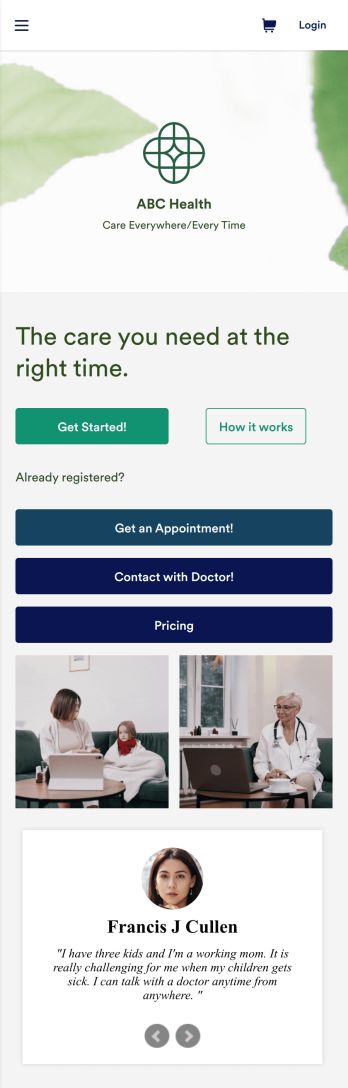
Telehealth App
Gather appointment bookings and patient information with ease using this Telehealth App from Jotform. Simple customize the app to match your needs, share it with patients using a link, and have them download it onto their computer, tablet, or smartphone for easy access. The app includes a Zoom Scheduler that lets patients select a time slot that works for them and generates a new Zoom meeting for each new booking.Need to customize this Telehealth App template? Drag and drop to rearrange the design, add your logo and branding, update existing forms, or connect them to 100+ popular app integrations. Jotform protects form data with a 256-bit SSL connection, GDPR and CCPA friendly features, but you can also optionally upgrade your forms to be HIPAA friendly. Save time with a free Telehealth App that your patients can use on any device.
Go to Category:Appointment & Booking Apps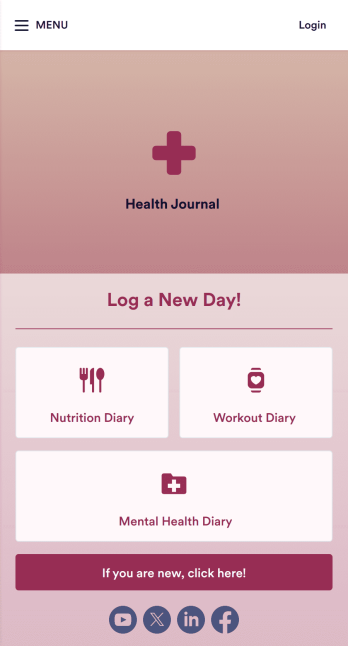
Health Journal App
Does your health services organization need an interactive and thoughtful way to track client data and progress? Give Jotform’s Health Journal App a shot. Have your patients log their moods, exercise goals, nutrition concerns, and health records. You can even receive payments and schedule appointments through your app.Use this Health Journal App ready-made, or use our drag-and-drop app builder to add your own personal flair. Make it your own by uploading images or videos, choosing colors and fonts you like, integrating with payment or scheduling widgets, including branding assets, and more. Get your clients on track to be their healthiest selves with Jotform Apps.
Go to Category:Healthcare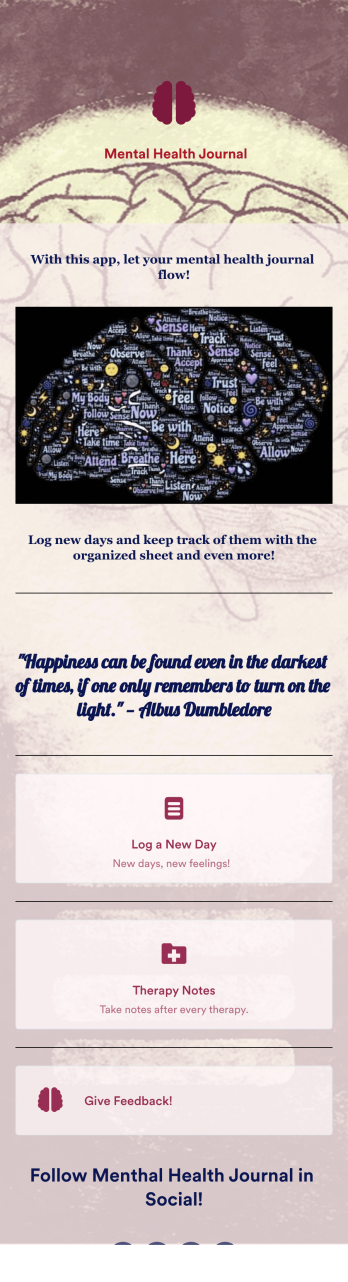
Mental Health Journal App
Need an efficient and less intrusive way to oversee your patients’ mental health? Jotform’s got you covered with our own custom Mental Health Journal App — no coding knowledge required. This app is great for psychologists or psychiatrists alike. Build a thoughtful app that lets your patients express themselves in a variety of ways. Upload daily or weekly check in forms, provide a list of resources and exercises, add appointment scheduling forms, and collect payments from your very own app.Need to make some changes to your app? Simply utilize our easy-to-use online app builder to give your Mental Health Journal App your own signature touch. Pick fonts and colors you like, upload images, integrate with helpful scheduling widgets, and more depending on you and your patients’ needs. Then simply share with your patients via QR code, email, or by linking to it in your patient portal.
Go to Category:Healthcare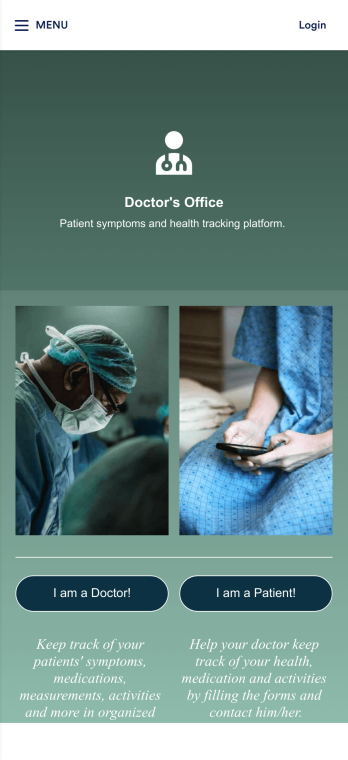
Symptom Tracker App
Provide your doctors and patients with an easier way to track symptoms and keep medical records updated with this free Symptom Tracker App. Both doctors and patients can download this app on any Android or iOS device to fill out their respective forms. Keep track of medical history, important medical forms, payments, and much more. All your practice’s important data stays together in your Jotform account — making information easily accessible to all.Need to update the look and feel of your custom app? Jotform’s got you covered. Use our simple drag-and-drop app builder to change your Symptom Tracker App’s design without coding. Upload your practice’s logo, update important forms, pick an app icon and background image, and make other changes to your very own app for free. You can instantly share your custom app with your patients via direct link, email, or scannable QR code. Make medical checkups a breeze Jotform’s Symptom Tracker App.
Go to Category:Healthcare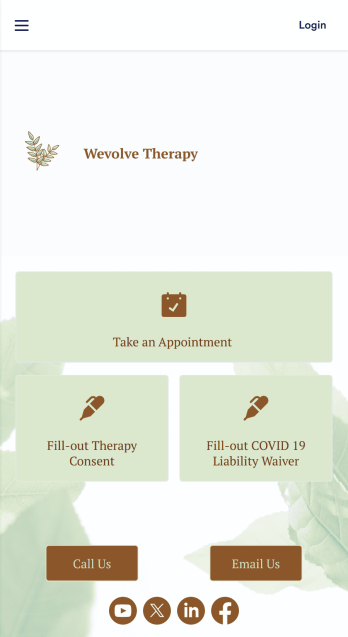
Online Therapy App
An online therapy app makes it easier for clients to request and access therapy services from any device. Make therapy more accessible with our free, customizable Online Therapy App. Once they’ve downloaded the app onto their mobile device or computer, clients can schedule appointments, sign consent forms, and fill out a COVID-19 liability waiver. You’ll receive form responses instantly, stored in your secure Jotform account.Need to make changes to this Online Therapy App Template? No problem — using our drag-and-drop interface, you can easily add elements such as forms, documents, links, images, buttons, videos, and much more. You’ll also be able to change the app icon, name, and design to better match your therapy clinic or private practice. Once your app is ready to be used, share it with clients by sending email invites or the app link. Clients will be able to access your counseling services and provide important information before their sessions from any device. Make it easier for people to get the help they need with an Online Therapy App that works anywhere.
Go to Category:Stress Management Apps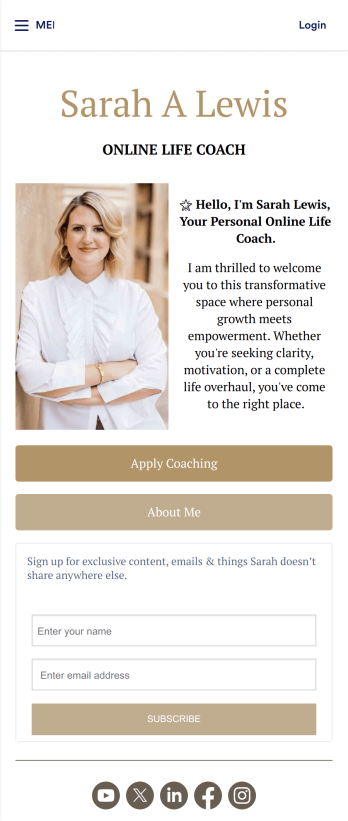
Life Coach App
A life coach app is a handy mobile application used by life coaches as a way to share their background and lessons with users — all in one centralized application. Build your own with this ready-made Life Coach App template from Jotform Apps. State your certifications and background, share some helpful tips, collect client feedback, share testimonials, and so much more.Want to make changes to this Life Coach App template? Use our drag-and-drop builder to add or remove forms, change fonts and colors, upload a background image, select a unique app icon, and more. You can even integrate your mobile application with 250+ platforms to send data directly to your other accounts. Once you’re done, all you need to do is share your app with clients — it’s that easy!
Go to Category:Mental Health Apps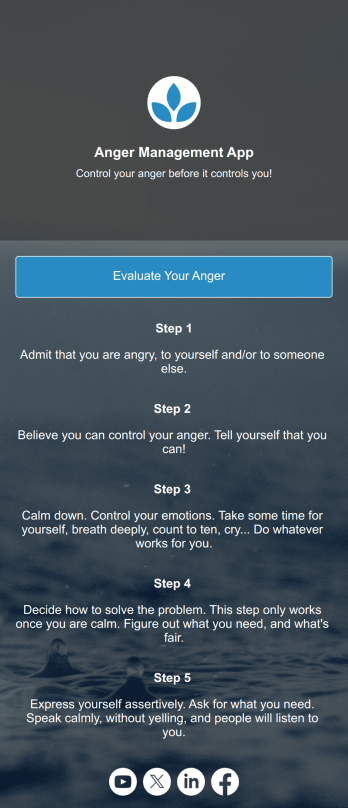
Anger Management App
Anger can be one of the more difficult emotions to regulate — but with our free Anger Management App, you or your patients can easily track your feelings from any device and get your anger under control. This ready-to-use app comes with an online anger evaluation form, an Anger Management Sheet, and tips for addressing your anger when it arises. You can use this yourself if you’re struggling with your anger, or you can easily share the app with your patients if you’re a therapist or counselor.Managing emotions looks different for everyone, so be sure to customize your Anger Management App to work best for you. No coding necessary — simply drag and drop to add more forms or text, upload a different background image, and change your app’s name, icon, and splash page. When you’re done, you can open and download it from any device and share it with others via link. Control your anger before it controls you with an Anger Management App that’s easy to use and tailored just for you.
Go to Category:Healthcare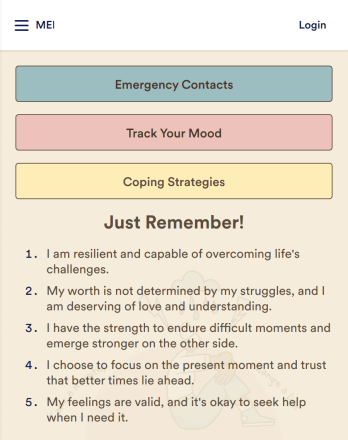
Suicide Safety Plan App
A suicide safety plan app is a preventative app made for those who have had or might have suicidal ideations in the future. This type of app allows individuals, their care practitioners, or their loved ones to create a cohesive safety plan for situations that require de-escalation or a step-by-step plan of action. Build a Suicide Safety Plan App with Jotform and include crisis hotline information, lists of personal reminders, step-by-step action plans, and more.Want to make changes to how your app looks? No problem. Use our no-code app builder to make any design or content changes. Drag and drop to change fonts and colors, upload images, integrate with trusted platforms, and more. Use Jotform Apps to build your Suicide Safety Plan App with care today.
Go to Category:Log Apps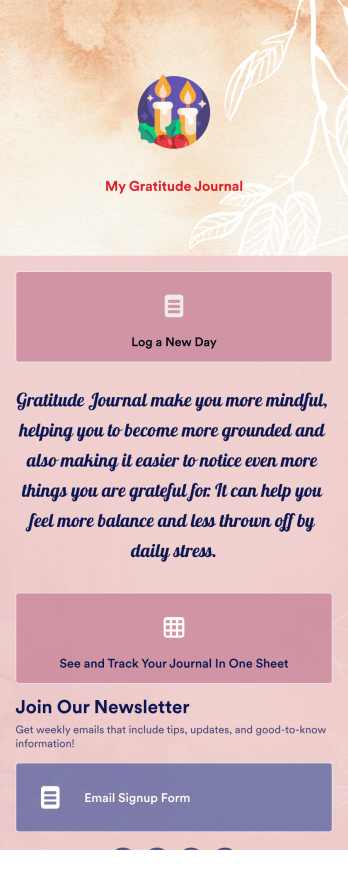
Gratitude Journal App
Whether you’re a life coach looking for an easy way to track your clients’ progress or an individual on a self-help journey, this Gratitude Journal App from Jotform is a great way to log things you’re grateful for. Create forms for daily or weekly entries, add spaces to upload video journals, or integrate with scheduling or payment widgets.Want to change up the look and feel of your Gratitude Journal App? No problem! Simply use our drag-and-drop app builder to make changes to fonts and colors, pick backsplashes, upload images or videos, and more. Then all you have to do is send your app to your clients or begin using it for personal projects. Show more gratitude in your life with this free app from Jotform.
Go to Category:Log Apps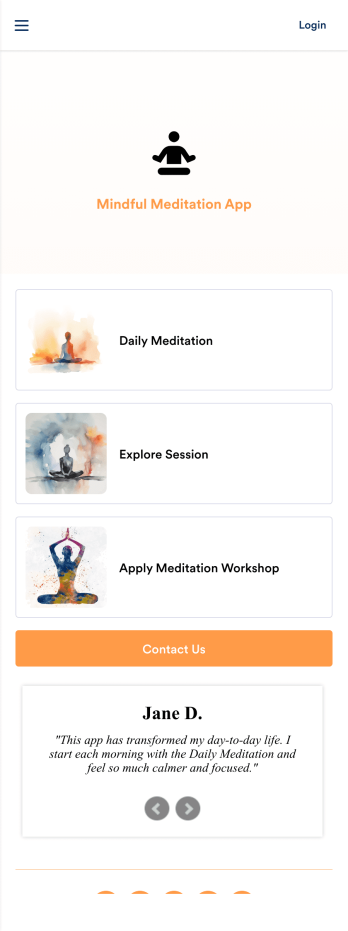
Mindful Meditation App
Looking to create a Mindful Meditation App to help your clients manage stress and improve their overall well-being? Jotform's App template allows wellness coaches, therapists, yoga studios, and mental health clinics to offer guided daily meditations, meditation workshops, and online meditation sessions with ease. This template is perfect for those looking to provide a convenient and accessible platform for users to enhance their mindfulness practices and focus on self-care. By utilizing Jotform's no-code app builder, you can customize your app with forms, widgets, and branding to create a fully personalized experience for your clients.Explore the top features of Jotform Apps that make creating your Mindful Meditation App a breeze. With a drag-and-drop builder, powerful app elements, and 70+ app widgets, you can design a user-friendly interface that meets your clients' needs. Plus, with options for e-sign documents, payments on any device, and data management with Jotform Tables, you can streamline your processes and provide a seamless experience for your users. Don't miss out on the opportunity to enhance user engagement with push notifications and advanced sharing options to keep your clients connected and informed. Start building your Mindful Meditation App today and offer your clients a valuable tool for managing their well-being.
Go to Category:Mental Health Apps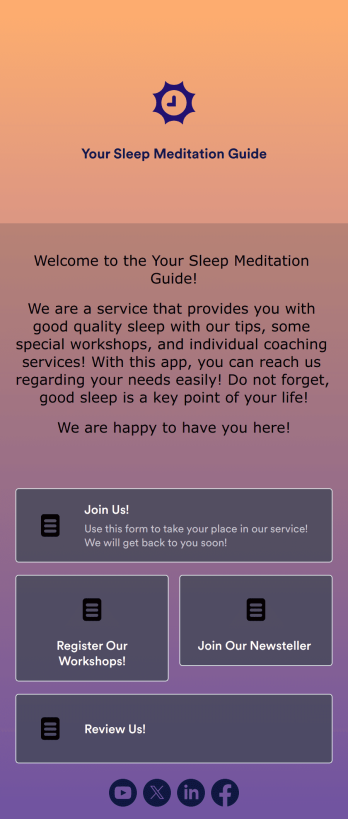
Sleep Meditation App
Need an organized way to send your clients their daily sleep meditations and reflections? Look no further than this handy Sleep Meditation App from Jotform. Improve your sleep meditation practice’s workflows by including daily reflection log forms, uploading guided meditation audio files, integrating with payment and scheduling widgets, and more.Customize your Sleep Meditation App to match your needs with Jotform’s easy-to-use online app builder. Drag and drop to change fonts and colors, upload videos or images, include branding assets, switch up the app’s backsplash, and more depending on your needs! Take your meditation organization to the next level with this free app from Jotform.
Go to Category:Online Service App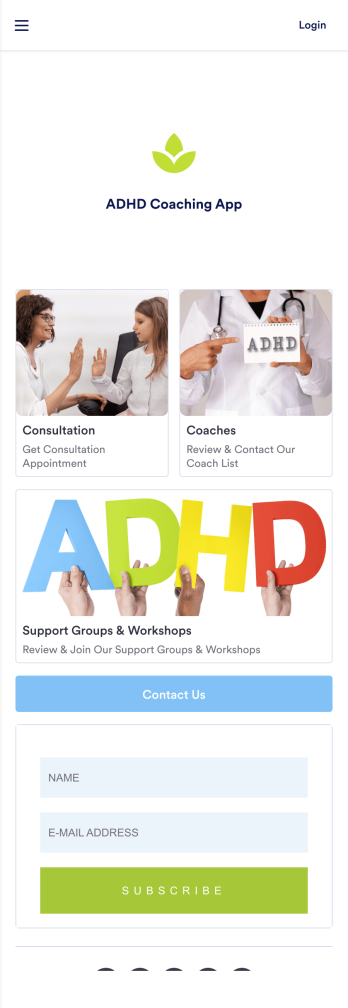
ADHD Coaching App
The ADHD Coaching App template from Jotform Apps is designed to assist ADHD coaches, mental health professionals, and educators in creating a customized app without any coding. This template allows users to streamline their consultation booking process, provide contact information, list support groups and workshops, and collect subscriptions effortlessly. By utilizing Jotform’s no-code app builder, users can create a fully customized app that meets their specific needs and branding requirements. With the ability to add forms, widgets, products, and branding elements, this template offers a seamless solution for organizing and managing ADHD coaching services.Explore the top features of Jotform Apps that make creating your own app a breeze. With a drag-and-drop builder, powerful app elements, and 70+ app widgets, users can easily customize their app to reflect their unique style and functionality. The flexible app designer allows for easy customization, while ready-to-use layouts and powerful online forms enhance the user experience. Enhance user engagement with push notifications and advanced sharing options to keep users informed and connected. With Jotform Apps, the possibilities are endless for creating a dynamic and user-friendly app for ADHD coaching services.
Go to Category:Consulting AppsAbout Mental Health Apps
Mental Health Apps are specialized mobile or web apps designed to streamline and support various mental health-related activities, such as therapy management, patient engagement, and mental wellness tracking. These apps have been effectively integrated into numerous operational use cases, including scheduling therapy sessions, maintaining patient records, and facilitating remote consultations. Industries such as healthcare, counseling, and corporate wellness programs increasingly rely on these apps to enhance service delivery and improve patient outcomes through seamless digital interactions and real-time data accessibility.
Jotform Apps, leveraging the power of Progressive Web App (PWA) technology, stands out as an ideal no-code app builder for creating impactful Mental Health Apps. This unique technology allows users to install apps directly via a browser, eliminating the need for App Store downloads and ensuring compatibility across iOS, Android, tablets, and desktops. By enabling centralized data management through Jotform Tables, Jotform Apps facilitates efficient workflow processes, ensuring that all stakeholders have access to synchronized and up-to-date information, thus enhancing collaborative efforts in mental health management.
Why Use Mental Health Apps?
- Mental Health Apps offer a streamlined way for healthcare providers to manage patient interactions and sessions efficiently. By digitizing appointments and follow-ups, these apps reduce administrative burdens, allowing professionals to focus more on patient care. This operational efficiency directly translates into improved patient satisfaction and better health outcomes.
- These apps enable remote monitoring and engagement, which is crucial in today's fast-paced and often geographically dispersed environments. They allow therapists and counselors to maintain consistent communication with their clients, ensuring continuity of care even when face-to-face meetings are not possible. This flexibility supports a more personalized approach to mental health management.
- With the integration of payment processing capabilities, Mental Health Apps simplify the billing process for both providers and clients. By using secure payment gateways like Stripe or PayPal, transactions are streamlined, reducing the time spent on financial management. This feature enhances the overall financial health of mental health practices by ensuring timely and accurate payments.
- The use of push notifications in these apps helps in maintaining client engagement and adherence to treatment plans. Reminders for upcoming sessions, medication alerts, and motivational messages can be automatically sent to clients, encouraging them to stay committed to their mental health journey. This proactive engagement approach fosters better treatment adherence and client satisfaction.
- Mental Health Apps also support data-driven decision-making through centralized data collection and analytics. By aggregating patient data in one accessible location, therapists can gain insights into treatment effectiveness and patient progress. This capability empowers mental health professionals to tailor interventions based on concrete data, enhancing the quality of care provided.
Common Problems Solved by Mental Health Apps
- One significant challenge in the mental health industry is managing client appointments and schedules efficiently. Traditional methods are often prone to errors and time-consuming. Mental Health Apps resolve this by providing an automated scheduling system that reduces errors and saves time, allowing practitioners to focus more on patient care rather than administrative tasks.
- Ensuring consistent and secure communication between clients and therapists is another common issue. In an industry where privacy is paramount, these apps offer encrypted messaging and data storage solutions that protect sensitive information while facilitating seamless communication. This reassures clients and builds trust in the digital treatment process.
- Payment collection and management can be cumbersome for many mental health practitioners, often leading to delayed or missed payments. Mental Health Apps address this by integrating secure payment processing systems that automate billing and invoicing, ensuring timely and efficient financial transactions.
- Tracking patient progress and maintaining comprehensive records is often challenging in a busy practice. These apps provide centralized data management, making it easy to access and update patient records. This improves the accuracy of records and enhances the ability to track treatment progress over time.
Matching Use Cases to Features
- Mental health practices often need to provide personalized care tailored to each client's needs. The Drag-and-Drop Interface allows practitioners to customize app features effortlessly, aligning app functionalities with specific client requirements. This adaptability ensures that the app remains relevant and effective in various therapeutic scenarios.
- In scenarios where quick dissemination of information is crucial, Push Notifications serve as an invaluable feature. They enable therapists to send timely reminders and updates to clients, fostering better communication and adherence to treatment plans. This real-time interaction capability enhances client engagement and therapy effectiveness.
- Payment Integrations, such as those with Stripe and PayPal, facilitate seamless financial transactions directly through the app. This functionality is perfect for mental health professionals who need to manage billing efficiently, ensuring that clients can make payments conveniently and securely, thus improving cash flow for the practice.
- For mental health organizations looking to reach a broader audience, Publish Options such as Public, Private, and Company-only settings allow for controlled distribution of the app. By tailoring access based on user groups, organizations can maintain privacy and exclusivity as needed, enhancing both security and user experience.
- The ability to share apps through Direct Link, Email, QR Code, or Social Media broadens accessibility for clients and collaborators. This feature is particularly useful for mental health campaigns or workshops, where easy access to resources can significantly enhance participation and outreach.
How to Create a Mental Health App
- Choose a category-relevant template from the Template List or start from scratch.
- Customize using the Drag-and-Drop Interface.
- Share via Link, QR Code, or Embed.
Top Use Cases for Mental Health Apps
- For Managers: Mental Health Apps serve as a powerful asset for managers overseeing mental health programs. These apps streamline administrative tasks by automating scheduling, billing, and communication, allowing managers to allocate resources more effectively. Additionally, centralized data management provides insights into program performance, enabling managers to make informed decisions that enhance service delivery and client satisfaction.
- For Teams: Mental health teams benefit from these apps through enhanced collaboration and communication. With features like centralized patient records and secure messaging, team members can easily share information and coordinate care plans. This ensures that all team members are aligned in their approach, leading to more cohesive and effective patient care.
- For Customers: Clients using Mental Health Apps experience a more accessible and engaging treatment process. The ability to schedule sessions, make payments, and receive notifications all from a single app enhances convenience and encourages adherence to treatment plans. This user-friendly approach fosters a positive experience, encouraging clients to remain committed to their mental health journey.
Summarizing Mental Health Apps
Mental Health Apps represent a critical advancement in the delivery of mental health services, offering a digital bridge between practitioners and clients. By integrating functionalities such as secure communications, billing, and data management, these apps streamline operations and enhance service accessibility. Jotform Apps, with its no-code approach and PWA technology, empowers mental health professionals to create tailored apps that meet the specific needs of their practices and clients, fostering improved outcomes and client satisfaction.
Frequently Asked Questions
1) Is it free to create and use Mental Health apps on Jotform?
Jotform offers a Starter plan that allows users to create and use Mental Health apps at no cost. This plan provides access to basic features, enabling users to explore the platform's capabilities without financial commitment. As needs grow, users can opt for paid plans to access advanced features and functionalities.
2) Are the data and payments collected through the app secure?
Yes, data and payments collected through Jotform Apps are secure. Jotform complies with GDPR regulations and employs advanced security measures, including encryption, to protect user information. This ensures that both client data and payment transactions are handled with the highest level of confidentiality and integrity.
3) Do I need any coding skills to create a Mental Health app with Jotform?
No coding skills are required to create a Mental Health app with Jotform. The platform's no-code app builder is designed with a user-friendly Drag-and-Drop Interface, allowing users to customize and build apps effortlessly. This accessibility empowers mental health professionals to create functional apps without technical expertise.
4) Can I collect payments for services directly through the app?
Yes, you can collect payments for services directly through the app using integrated payment processors such as Stripe and PayPal. These integrations enable secure and efficient financial transactions, ensuring that clients can easily make payments and that practitioners receive timely compensation.
5) Does Jotform support offline data collection for Mental Health apps?
Jotform supports offline data collection through its Mobile Forms feature. This capability allows users to collect and store data even when not connected to the internet, ensuring that information is not lost and can be synchronized once connectivity is restored. This is particularly beneficial for practitioners working in areas with limited internet access.
6) Are Jotform Apps compatible with both iOS and Android devices?
Yes, Jotform Apps are compatible with both iOS and Android devices. Built on Progressive Web App technology, these apps can be accessed and installed via a browser, ensuring seamless functionality across different operating systems and devices. This cross-platform compatibility enhances user accessibility and convenience.
7) How can Mental Health Apps improve client engagement?
Mental Health Apps improve client engagement by offering features like push notifications and secure messaging, which facilitate consistent communication between clients and therapists. These features keep clients informed and motivated, fostering a more interactive and involved treatment experience.
8) Can Mental Health Apps be used for corporate wellness programs?
Yes, Mental Health Apps can be effectively utilized in corporate wellness programs. They offer functionalities like centralized data collection and personalized wellness tracking, which are essential for monitoring employee mental well-being. By integrating these apps into wellness strategies, companies can promote a healthier workplace environment and improve overall employee satisfaction.